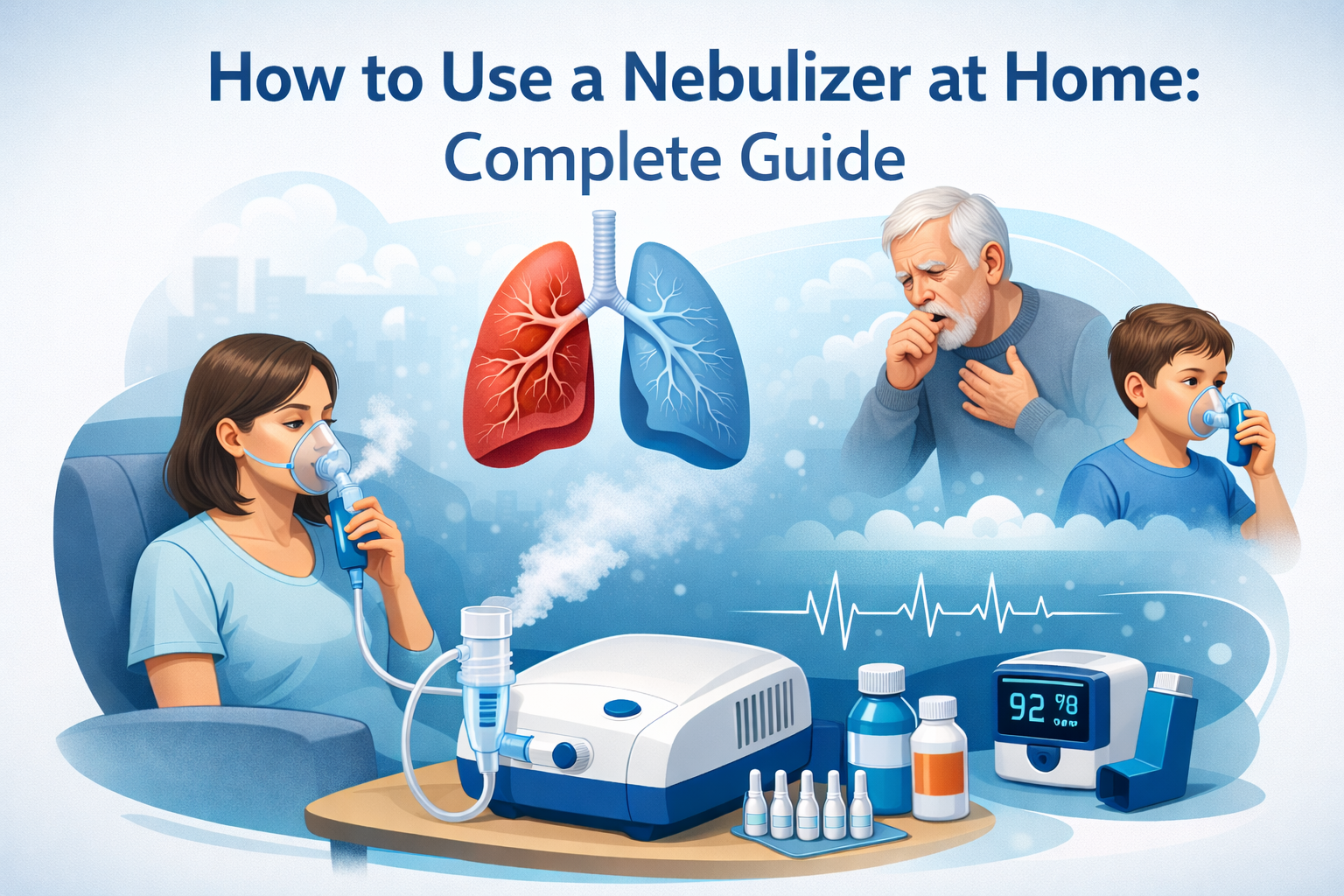
Breathing is something most people take for granted until it becomes difficult. Whether you’re dealing with asthma, chronic bronchitis, COPD, or seasonal respiratory issues, managing your breathing effectively is crucial for maintaining a good quality of life. One of the most trusted medical devices for delivering fast and effective relief is a nebulizer.
Using a nebulizer at home can feel overwhelming at first, especially if you’ve never handled medical equipment before. However, once you understand how it works and follow the correct steps, it becomes a simple and reliable part of your routine.
What is a Nebulizer and Why is it Important?
A nebulizer is a medical device that transforms liquid medication into a fine mist, making it easier to inhale directly into the lungs. Unlike tablets or syrups that take time to circulate through the body, nebulizers deliver medication straight to the source of the problem your respiratory system.
This direct delivery system is what makes nebulizers extremely effective for quick relief and long-term management of breathing conditions.
Some key reasons why nebulizers are widely recommended include:
- They provide fast-acting relief during breathing difficulties
- They are easy to use for children and elderly patients
- They eliminate the need for coordination required in inhalers
- They ensure deep penetration of medicine into the lungs
Because of these advantages, nebulizers are often prescribed for both emergencies and daily respiratory care.
How Does a Nebulizer Work?
Understanding how a nebulizer works can help you use it more effectively and appreciate its importance in treatment.
A nebulizer uses air pressure or vibration technology to convert liquid medicine into tiny aerosol particles. These particles are then inhaled through a mask or mouthpiece, allowing them to reach deep into the lungs where they can act quickly.
The process may sound technical, but it follows a simple mechanism:
- The machine pulls air through a compressor
- The air passes through the liquid medication
- The liquid turns into a breathable mist
- You inhale the mist directly into your lungs
This method ensures that the medicine is not wasted and reaches the areas where it is needed most.
Who Should Use a Nebulizer at Home?
Nebulizers are not just for severe patients they are commonly used by people of all ages who need respiratory support.
If you or someone in your family experiences recurring breathing issues, a nebulizer may be part of your treatment plan.
It is typically recommended for:
- People with asthma who experience frequent attacks
- Patients suffering from COPD or chronic lung diseases
- Individuals recovering from respiratory infections
- Children who cannot properly use inhalers
- Elderly individuals who need a simpler method of medication delivery
Using a nebulizer at home allows for timely treatment without needing frequent hospital visits, which can be both convenient and cost-effective.
Step-by-Step Guide to Using a Nebulizer at Home
Using a nebulizer correctly is essential for getting the full benefit of the medication. Each step plays a role in ensuring safety, hygiene, and effectiveness.
Step 1: Start with Proper Hygiene
Before handling any medical equipment, cleanliness should always be your first priority.
Washing your hands thoroughly reduces the risk of introducing bacteria into the machine.
Make sure you:
- Wash hands with soap for at least 20 seconds
- Dry them with a clean towel
- Avoid touching contaminated surfaces afterwards
This simple step can prevent infections and ensure safe treatment.
Step 2: Prepare the Medication Carefully
The effectiveness of your treatment depends heavily on using the correct medication and dosage.
Take your time during this step and ensure everything is accurate.
Important things to follow:
- Use only doctor-prescribed medication
- Check the expiry date before use
- Measure the exact dosage recommended
- Avoid mixing medicines unless instructed
Some medications come in pre-measured vials, which makes the process easier and reduces the chance of error.
Step 3: Assemble the Nebuliser Properly
Once your medication is ready, the next step is assembling the nebulizer. Incorrect assembly can lead to poor mist production or medicine loss.
Ensure all parts are securely connected.
Typical setup includes:
- Connecting the tubing to the compressor
- Attaching the medication cup
- Fixing the mouthpiece or mask
A properly assembled nebulizer ensures smooth airflow and effective delivery of medication.
Step 4: Maintain the Right Body Position
Your posture plays a surprisingly important role in how well the medication reaches your lungs.
Always sit upright in a comfortable position. This allows your lungs to expand fully and absorb the medicine efficiently.
Keep in mind:
- Avoid lying down during the session
- Keep your head slightly elevated
- Stay relaxed and calm
Good posture improves airflow and enhances the effectiveness of the treatment.
Step 5: Begin the Nebulization Process
After everything is set up, turn on the machine. You should immediately notice a fine mist coming from the mouthpiece or mask.
Now focus on your breathing pattern.
For best results:
- Take slow, deep breaths
- Inhale through your mouth
- Hold your breath for a few seconds
- Exhale slowly
This controlled breathing ensures that the medication reaches deep into your lungs rather than staying in the upper airway.
Step 6: Continue Until Medication is Finished
A typical nebulizer session lasts between 10 to 15 minutes. It’s important not to rush or stop midway.
You’ll know the session is complete when the mist reduces significantly or stops.
During this time:
- Stay relaxed and patient
- Avoid talking unnecessarily
- Ensure the mask fits properly
Completing the full session ensures you receive the complete dose of medication.
Step 7: Turn Off and Safely Store the Device
Once the treatment is complete, turn off the machine and carefully disconnect all components.
Proper handling after use is just as important as during use.
Make sure to:
- Empty any leftover medication
- Disconnect tubing and mask
- Place parts on a clean surface
This prepares the device for cleaning and future use.
Cleaning and Maintenance: Why It Matters
Many people underestimate the importance of cleaning their nebulizer, but this step is critical for preventing infections and ensuring long-term performance.
A dirty nebulizer can become a breeding ground for bacteria and mold, which can worsen respiratory conditions instead of improving them.
Daily Cleaning Routine
After each use, basic cleaning should be done immediately.
This includes:
- Washing the medication cup with warm water
- Rinsing thoroughly to remove residue
- Allowing parts to air dry completely
Weekly Deep Cleaning
In addition to daily cleaning, a more thorough disinfection should be done at least once a week.
This helps eliminate hidden germs.
You can:
- Soak parts in a vinegar-water solution
- Rinse with clean water
- Dry in a dust-free area
Common Mistakes to Avoid
Even small mistakes can reduce the effectiveness of your treatment or lead to health issues.
Being aware of these mistakes can help you avoid them.
Some common errors include:
- Skipping cleaning after use
- Using incorrect medication dosage
- Breathing too fast during treatment
- Stopping the session too early
- Using damaged or worn-out parts
Avoiding these mistakes ensures better results and safer usage.
Safety Tips for Nebulizer Use at Home
Safety should always be your top priority when using any medical device.
A few simple precautions can make a big difference.
Important safety tips:
- Never share your nebulizer with others
- Keep the device away from water
- Store medications safely
- Follow your doctor’s instructions strictly
These practices help maintain both hygiene and effectiveness.
Final Thoughts
Using a nebulizer at home is not complicated once you understand the process. With the right technique, proper cleaning, and consistent usage, it can significantly improve your breathing and overall health.
The key is to stay consistent, follow medical advice, and maintain your equipment properly.
Over time, using a nebulizer will become a natural part of your routine—helping you breathe easier and live better.
FAQs
1. What is the correct way to breathe while using a nebulizer?
Breathing technique plays a major role in how effective the treatment is. You should breathe slowly and deeply through your mouth so the medication can reach deep into your lungs.
To improve effectiveness:
- Take slow, controlled breaths instead of rapid breathing
- Hold your breath for 2–3 seconds after inhaling
- Exhale gently and completely
- Avoid talking during the session
This method ensures maximum absorption of the medication.
2. How long should a nebulizer session last?
A typical nebulizer session usually takes around 10 to 15 minutes. However, the exact time depends on the type of medication and the machine being used.
You’ll know the session is complete when:
- The mist becomes very light or stops completely
- The medication cup is empty
- The sound of the machine changes slightly
Stopping too early can reduce the effectiveness of the treatment, so always complete the full session.
3. Can I use a nebulizer without a doctor’s prescription?
It is not recommended to use a nebulizer without medical advice. The medication used in nebulizers is specifically prescribed based on your condition.
Using it without guidance can lead to:
- Incorrect dosage
- Wrong medication choice
- Unwanted side effects
Always consult a healthcare professional before starting nebulizer therapy.
4. Is it safe to use a nebulizer every day?
Yes, using a nebulizer daily is safe if your doctor has prescribed it as part of your treatment plan. Many people with chronic conditions like asthma or COPD rely on daily nebulization.
However, you should always:
- Follow the prescribed dosage strictly
- Avoid overuse
- Monitor any unusual side effects
Consistency is important, but overuse can be harmful.
5. Can children use a nebulizer at home?
Yes, nebulizers are especially useful for children because they are easier to use than inhalers. Kids do not need to coordinate breathing, which makes the process smoother.
To make it easier for children:
- Use a properly fitting child mask
- Keep them calm with music or cartoons
- Ensure they sit still during the session
- Supervise the entire process
This helps ensure the child receives the full benefit of the treatment.
6. What happens if I don’t clean my nebulizer properly?
Not cleaning your nebulizer can lead to serious health risks. Moist environments inside the الجهاز can become a breeding ground for bacteria and mold.
This can result in:
- Respiratory infections
- Reduced effectiveness of medication
- Bad odor or contamination
Regular cleaning is essential to keep the device safe and hygienic.
7. Can I lie down while using a nebulizer?
It is not recommended to lie down during nebulizer use. Sitting upright allows your lungs to expand fully and helps the medication reach deeper areas.
For best results:
- Sit straight in a chair
- Keep your head slightly raised
- Stay relaxed and still
Proper posture significantly improves treatment effectiveness.
8. Can I use plain water in a nebulizer?
No, you should never use plain water as a substitute for medication. Only use solutions prescribed by your doctor, such as saline or medicated liquids.
Using plain water may:
- Provide no therapeutic benefit
- Affect the device performance
- Delay proper treatment
Always stick to prescribed solutions.
9. How do I know if my nebulizer is working properly?
A properly working nebulizer will produce a consistent, visible mist when turned on.
Signs that your nebulizer is functioning well include:
- Steady mist flow
- Normal machine sound
- Complete medication delivery
If you notice weak mist or unusual noise, the device may need cleaning or replacement of parts.
10. When should I replace nebulizer parts?
Nebulizer parts wear out over time, and using damaged components can reduce effectiveness.
You should replace parts regularly:
- Mask: Every 3–6 months
- Nebulizer cup: Every 6 months
- Tubing: Every 6–12 months
Regular replacement ensures consistent performance and hygiene.
11. Are there any side effects of using a nebulizer?
Nebulizer treatments are generally safe, but some medications may cause mild side effects.
These can include:
- Slight increase in heart rate
- Nervousness or shakiness
- Dry mouth or throat irritation
If side effects become severe or persistent, consult your doctor immediately.
12. Can I share my nebulizer with someone else?
No, sharing a nebulizer is not safe. It can spread infections and bacteria from one person to another.
For safety:
- Each person should have their own mask and cup
- Clean the device thoroughly after every use
- Avoid cross-contamination
Personal use only is strongly recommended.